Female Arousal Gel12 Arousal Gel Side Effects to Watch for and When to Stop
12 Arousal Gel Side Effects to Watch for and When to Stop
The short answer
The most common side effects of arousal gels are mild irritation, burning, stinging, itching or a sticky, dry feel. These are often linked to ingredients such as glycerin, flavourings, warming or cooling agents, alcohols and menthol. Stop using the product if you notice burning that does not settle after rinsing with water, rash, swelling, blistering or breathing difficulty, and get medical care for severe reactions.
Some links on this site are affiliate links: if you buy through one, the site may earn a commission at no extra cost to you. More about this.
If you are comparing arousal gels, you have probably seen the same worries come up: will this irritate me, does it actually do anything, and is it safe to use with a partner or alongside medication. This guide covers those questions.
We have listed 12 arousal gel side effects you should know about, with notes on what tends to cause each one and when to stop. The items were chosen from the side effects and ingredient concerns that come up most often in product information and in people's reported experiences.
Some of the reports we looked at describe the sensation as mild tingling that fades quickly. Others describe burning that lasts. Knowing which is which helps you decide whether to keep going or stop.
Let's dive in.
Stop Rules at a Glance
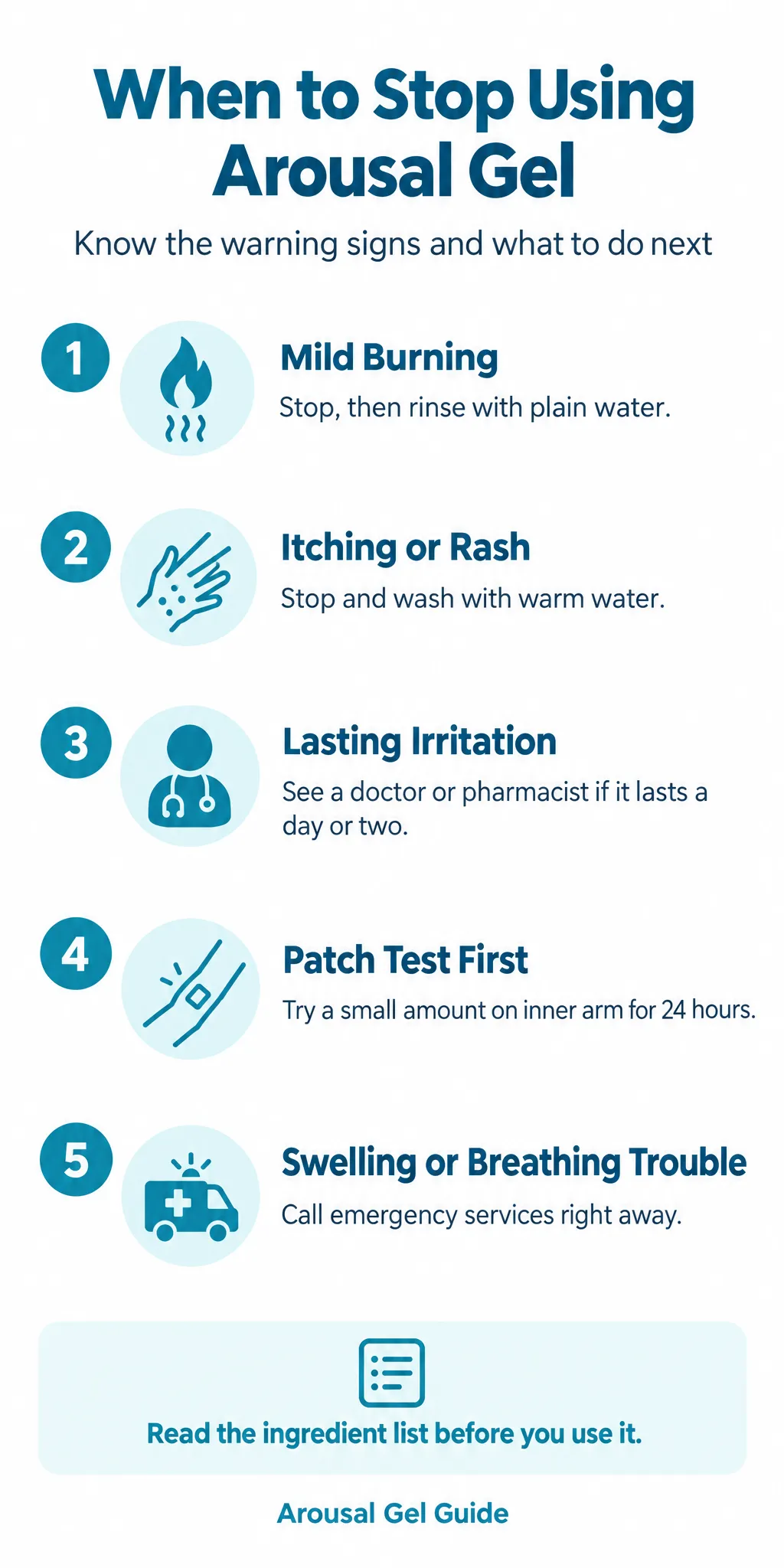
| Symptom | What to do |
|---|---|
| Burning that does not ease | Stop, rinse with water |
| Itching, redness or rash | Stop, wash with warm water |
| Skin symptoms lasting a day or two | See a doctor or pharmacist |
| Swelling, hives or breathing trouble | Call emergency services |
| Blistering or spreading rash | Seek medical help promptly |
A closer look at each
Mild Burning or Stinging: This is the most common complaint, and it is the one readers most need to judge quickly. A short tingle is normal for many gels. Burning that builds, lingers, or feels like heat on tissue is not. Stop using the product, rinse with plain water, and let the area settle before deciding what to do next.
Itching, Redness and Rash: Skin reactions come next, and they need a clear stop rule. If itching, redness, or a rash appears, stop using the gel and wash the area with warm water. If the symptoms do not clear within a day or two, or spread, see a doctor or pharmacist before trying any product again.
Swelling, Hives and Breathing Trouble: These are signs of a serious allergic reaction and need urgent care. Swelling of the lips, face, or genitals, raised hives, wheezing, or difficulty breathing mean you should call emergency services or go to the nearest emergency department straight away. Do not wait to see whether it passes.
Glycerin: Glycerin is a common ingredient that many readers see on labels and wonder about. It is a simple humectant that helps a gel feel slick and moist. Most people tolerate it well, but a few find it sticky or mildly irritating, especially in high amounts. If you notice a sticky feel or discomfort, a lower-glycerin product may suit you better.
Parabens and Preservatives: Readers often search for preservatives they have heard are harsh. Parabens are preservatives used to stop bacteria and mould from growing in water-based products. They are widely used and considered acceptable in regulated products, but some people prefer to avoid them. If you have sensitive skin, a product with fewer preservatives or a shorter ingredient list is a reasonable place to start, and a patch test on the inner arm before first use is a sensible habit.
Flavourings, Warming and Cooling Agents: Tingle and warming effects are often the reason people buy these products, and they are also a common cause of irritation. Menthol, mint, cinnamon, and similar agents create the sensation, but they can sting or inflame delicate tissue. Use a small amount, avoid broken skin, and stop if the tingle turns into pain or heat that continues after rinsing.
Alcohols and Drying Ingredients: Some gels contain alcohol or other drying agents, and these can leave skin feeling tight or dry after use. Dryness often shows up within minutes and can make sex less comfortable. Check the ingredient list for alcohol near the top. If your skin feels tight, rinse with warm water and switch to a plain, fragrance-free lube next time.
Oil-Based Products and Latex Condoms: Oil-based gels, including those with coconut or MCT oil, can weaken latex condoms and cause them to break. This is a practical point many people miss. If you use condoms, choose a water-based or silicone-based gel instead. Foria's own maker advises against using its oil-based products with condoms, and the same caution applies to any oil-based gel.
Yeast Infections and Bacterial Vaginosis: Yeast infections often bring thick white discharge and itching, while bacterial vaginosis usually brings thin grey or white discharge with a fishy smell. Either can follow a change in vaginal environment, not just a product. If symptoms appear after using a gel, stop using it and see a clinician for testing before assuming the gel caused it.
Patch Testing Before Full Use: Before using a gel on the whole area, put a small amount on a patch of inner arm or the inner thigh and wait 24 hours. If redness, itching or stinging develops, do not use it intimately. This takes one minute and catches many irritation problems early. It is one of the most practical safety steps you can take.
Medications, Pregnancy and Existing Conditions: Some gels contain ingredients that may interact with medications, or may not be advised during pregnancy or with conditions such as genital infections, recent surgery or vulvar skin disorders. This is a fair question to ask. Check with a doctor or pharmacist before use if any of these apply to you, and read the full ingredient list first.
When to Stop and Get Advice: Stop using any arousal gel straight away if you notice burning that does not ease within a few minutes of rinsing, swelling, blistering, hives, rash spreading past the application area, or trouble breathing. Seek medical help promptly for any of these. For milder but lasting irritation, stop the product and see a clinician if it has not settled within a day or two.
What hands-on reviewers found
These are other people's hands-on tests, summarised and credited to them. Watch the full videos for their complete reviews.
Tawney Seren: Toy Review - Promescent Female Arousal Gel!
Tawney Seren found the Promescent female arousal gel fast acting and long lasting, with a light tingling and numbing effect, a mild minty taste, and no burning or freezing, and she credits it with extending her arousal and her partner's org
- The gel comes in a small black container that looks like a lipstick case, is discreet to carry, and has a very faint smell that does not stain lingerie. (at 0:33)
- The reviewer says only a few drops are needed, and a little goes a long way. (at 0:33)
- The reviewer says the gel acts fast and lasts up to 25 minutes, and she reached and kept arousal for about 25 minutes. (at 1:06)
Frequently asked questions
Is lubricant gel safe to use?
For most adults, a water-based or silicone-based lubricant used as directed is considered low risk. Irritation can still happen, especially with fragrance, flavoring, warming or tingling ingredients. Patch test on a small area first, stop if you notice burning or itching, and check with a clinician if you have a skin condition, are pregnant, or are unsure about an ingredient.
Does the O cream really work?
Results vary, and it is hard to say for certain from product marketing alone. Some people report a warming or tingling sensation, but not everyone notices a change. Independent, controlled evidence for many over-the-counter arousal creams is limited. Read the ingredient list, watch for irritation, and treat any strong promise with caution.
What is sildenafil cream used for?
Sildenafil is the active ingredient in prescription oral medicines used for erectile dysfunction, and it works by increasing blood flow. Topical sildenafil creams are marketed for women, but their safety and effectiveness for this use are not well established. Because sildenafil can interact with other medicines and affect blood pressure, speak with a clinician before trying one.
How long does it take for arousal cream to work?
Many products are described as acting within a few minutes, and some reviewers report a fairly quick onset. Timing depends on the product, how much you use, your body, and whether you are already aroused. Some users apply a product about 15 to 20 minutes before sex, while others apply it during foreplay. If nothing changes or you feel discomfort, stop using it.
Which arousal gel ingredients are most likely to cause irritation?
Fragrance, flavoring, menthol, warming agents, and botanical extracts are the ingredients most often linked to burning, stinging or redness. Alcohol and some preservatives can also dry or irritate sensitive skin. Look for a short, simple ingredient list if you have sensitive skin. Stop use and rinse with water if burning or swelling starts, and seek medical advice if symptoms persist.
Wrapping up
That makes 12 side effects and warning signs to watch for with arousal gels.
Which one will you check for first, or is there one I missed?
If you are comparing products, Visit the official site to read the ingredient list and directions before you decide.